




Cirque de Moureze: exploring a dolomitic chaos in Herault - South of France
Summary
- ●1. The Cirque de Mourèze: a labyrinth of giants carved by time
- ●2. Mourèze Village: a medieval gem at the foot of the rocks
- ●3. Reaching New Heights: The Belvedere and Mount Liausson
- ●4. Practical Guide: preparing your visit to Mourèze
- ●5. Conclusion: a timeless immersion with Wisud
- ●6. FAQ: Frequently asked questions about Mourèze
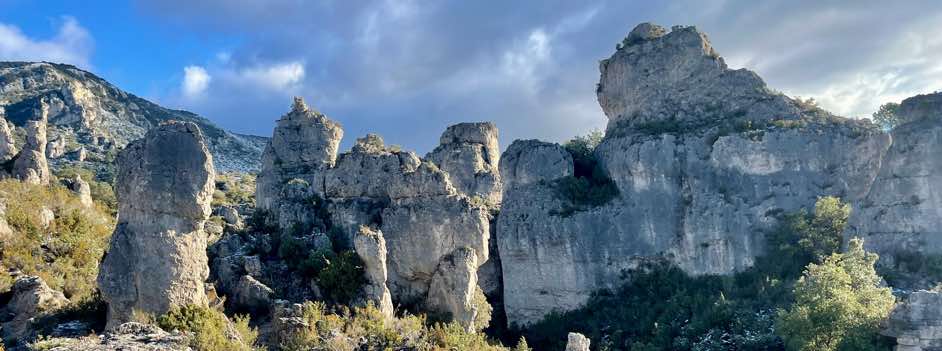
After the red lands of Salagou, welcome to a world of white limestone and fantastic shapes: the Cirque de Mourèze. Imagine a vast 300-hectare labyrinth where dolomitic rock columns rise toward the sky, sculpted by millennia of erosion. This mineral "chaos," located in the Hérault region, offers one of the most unusual and poetic landscapes in the South of France.
As a guide for Wisud, I particularly enjoy accompanying our travelers through this stone maze. It is a place that stimulates the imagination, where every rock seems to tell a story or depict a petrified creature. In this guide, I share my secrets for exploring this listed site, from the discrete charm of Mourèze village to the vertiginous panoramas overlooking the valley.
Ready for an unusual exploration?
Discover the mysterious shapes of Mourèze without getting lost in the labyrinth. Let us guide you for a day rich in geological discoveries.
➜ Discover Mourèze & Salagou in a small group
✅ Local guide, transport, and stories included
1. The Cirque de Moureze: a labyrinth of giants carved by time
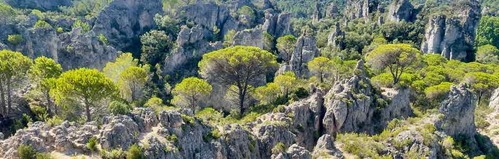
Dolomite erosion: a 160-million-year-old natural spectacle
As soon as you enter the Cirque de Mourèze, the feeling of changing dimensions is immediate. You leave the civilized world to enter a mineral chaos that took shape about 160 million years ago, during the Jurassic period. At that time, the Hérault was covered by a warm, shallow sea where carbonate sediments accumulated. Under the influence of magnesium in the water, the limestone transformed into dolomite, a much more resistant rock. What we see today are the "skeletons" of these marine reefs that erosion has patiently exposed over millennia.
Did you know? There is another site of unique beauty in Hérault: the grandiose Cirque de Navacelles, a UNESCO World Heritage site. To continue your journey, discover our ➜ Guide to the Cirque de Navacelles: an extraordinary natural site.
The cirque covers over 300 hectares and is a true test for the imagination. Turning onto a path bordered by pines and holm oaks, you might recognize a sphinx, a camel, or a tall column that seems to watch over hikers. As a guide, I love observing travelers' reactions when they realize these giant sculptures are a pure whim of nature. The contrast between the brilliant white of the dolomitic rock, the deep green of the garrigue, and the blue Hérault sky creates a striking natural picture, particularly photogenic at the end of the day when shadows lengthen.
A mineral chaos classified as a "Grand Site de France"
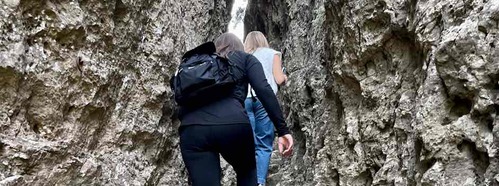
It is fascinating to think that this "wild" landscape was once very different. Until the early 20th century, the cirque was almost bare: herds of goats and sheep maintained the vegetation, leaving the rocks completely exposed. Today, the forest has reclaimed its rights, adding a mysterious side to this labyrinth. However, the term "labyrinth" is not exaggerated! While the main trail is marked, countless goat paths and rocky crevices can quickly disorient unwary walkers. This is where Wisud's accompaniment makes sense: we take you through secret passages and hidden cavities, away from the crowds, to help you discover the most intimate corners of this listed site.
2. Moureze Village: a medieval gem at the foot of the rocks
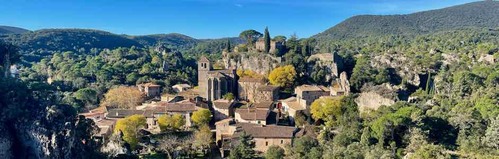
Medieval architecture between alleys and white rocks
Before diving into the stone labyrinth, take the time to stroll through Mourèze village. This small medieval town, nestled at the foot of a rocky amphitheater, is one of the most picturesque in the Hérault hinterland. Here, architecture and geology are one: dry stone houses seem to grow directly from the dolomite, creating a rare visual harmony. Walking through its narrow, flower-lined streets, you discover a typically Mediterranean way of life, far from the hustle and bustle of coastal resorts.
Sainte-Marie Church and the historical remains of the Castellas
The highlight of the village visit is undoubtedly its 12th-century Romanesque church, dedicated to Sainte-Marie. Standing proudly above the canal tile roofs, it offers a striking contrast between its rigorous silhouette and the tormented shapes of the surrounding rocks. A little higher up, the remains of the castle (the Castellas) remind us that Mourèze was once a strategic stronghold. During our excursions, I like to stop in the village square to watch the ballet of locals and hikers, while explaining how this village has survived the centuries by utilizing its mineral resources and sheltered position.
Did you know? From churches to castles, Hérault is full of architectural gems, both famous and confidential, witnessing a fascinating medieval history. For history buffs, don't miss our ➜ Guide to the most beautiful castles to visit in Hérault
But what makes Moureze truly unique is the feeling of being on the edge of two worlds. At every street corner, white rock peaks emerge between two houses, reminding us that wild nature is at home here. It is the perfect starting point to soak up the local atmosphere before climbing to the summits. For foodies, the village also hides a few spots to taste local garrigue honey or wine under a trellis. A suspended moment that we love to share with our small groups to conclude the village exploration.
3. Reaching New Heights: The Belvedere and Mount Liausson
The Belvedere: the best panoramic view of the dolomitic cirque
To grasp the full scale of the site, you must step away from the stone maze for a moment and gain some altitude. The Mourèze Belvedere is an essential stop on our walks. In just a few minutes of walking, you reach a natural promontory offering a bird's-eye view of the "chaos." This is where you best understand the organization of this giant labyrinth: dolomite columns seem to emerge from the forest like petrified sentinels. It’s the perfect time to take out your camera, as the contrast between the white rocks and green garrigue is breathtaking.
Mount Liausson: the link between Moureze and Lake Salagou
Looking up, you see the imposing ridge of Mount Liausson reaching 535 meters. This rocky barrier separates two worlds: to the south, the dolomitic cirque of Mourèze, and to the north, the valley of Lake Salagou. While the summit remains the playground of the most athletic hikers, for us, it serves as a fascinating visual landmark. During our outings, I like to tell how this limestone mountain protects the village and influences the local microclimate, allowing rare Mediterranean flora to flourish among the rocks.
Join our unusual hike at the Canyon des Ruffes
✅ Small group, local guide, and departure from Montpellier included
The show isn't limited to geology. From these high points, you overlook the village roofs and spot ancient transhumance paths. It is a true lesson in living geography. You become aware of the force of the elements that shaped this unique landscape over millennia. After admiring this panorama, we slowly descend back to the heart of the cirque, taking advantage of the cool shaded passages to continue our immersion in this fantastic world.
4. Practical Guide: preparing your visit to Moureze
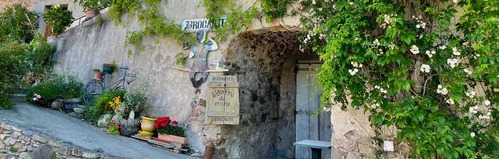
- Population: The village has about 200 inhabitants (the Mourézois), a figure that reflects the preserved calm of this Hérault gem.
- Parking and Fees: Parking is mandatory at the municipal lot at the village entrance (paid in season, about €3 for cars). Tip: Arrive before 10 AM in summer, as the lot is small and fills up very quickly.
- Public Restrooms: Facilities are available at the village entrance, right next to the visitor parking.
- Best Time to Visit: Spring for the flowering garrigue or winter for the incredible clarity of the white rock. In summer, the reflection makes the cirque very hot: bring plenty of water.
- Equipment: The terrain is rocky and sometimes slippery. A good pair of walking shoes is essential (avoid city shoes or smooth-soled sandals).
- Without a Car: Public transport access is complex from Montpellier. To simplify your logistics, check our tips on things to do around Montpellier accessible without a car.
5. Conclusion: a timeless immersion with Wisud
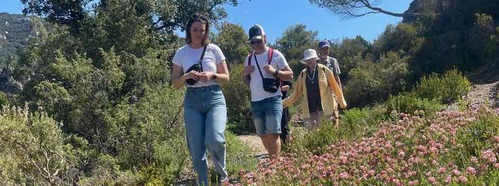
Visiting the Cirque de Mourèze is to treat yourself to a dive into a fantastic world where stone seems to come to life. Between the authentic charm of its medieval village and the dolomite labyrinth, this site is an essential stop for anyone wishing to discover the mineral soul of Hérault.
At Wisud, we put our guide expertise at your service to navigate this maze and reveal geological secrets that traditional guides often miss. Ready for adventure in the heart of the rocks?
✅ A stress-free day: transport and expert guide included from Montpellier
Read also: To complete your stay in Hérault, don't miss our selection of the ➜ Most beautiful villages around Montpellier.
Discover Mourèze on video:
6- FAQ: Your questions about the Cirque de Mourèze
What can you do at the Cirque de Mourèze?
The main activity is hiking in the heart of the dolomitic labyrinth. You can also visit the medieval village, climb to the Belvedere for the panoramic view, or discover the remains of the Castellas. It’s an exceptional site for photography and observing garrigue flora.
Is access to the cirque free?
Access to the cirque's trails is entirely free. Only parking at the municipal lot at the village entrance is paid during the season.
Can you visit the cirque with children?
Yes, it's a real playground for them, but vigilance is required: rocks can be slippery and some passages are steep. Bring good shoes.
How long does it take to visit the site?
Allow about 1.5 hours for a classic discovery loop and a visit to the village. For a complete immersion including the Belvedere, plan for a half-day.


